

The best home cardio machine is the one you will still be using in March. That sounds like a platitude until you look at the resale listings every spring – they are full of treadmills bought in January. Choose for your joints, your space and your boredom threshold, in that order.
Match the machine to your joints
Treadmill – highest impact, highest calorie burn per minute, and the most specific training if you run outdoors. Hard on knees, hips and ankles if you already have problems there.
Elliptical – your feet never leave the pedals, so impact is near zero while still working the whole body. The standard recommendation for anyone with joint issues who still wants weight-bearing exercise.
Exercise bike – no impact at all and fully supported on a recumbent. The gentlest option, and the easiest to do while reading or watching something.
Rower – no impact, and the only one of the four that meaningfully trains upper body and back alongside legs. Demands good technique; bad form means a sore lower back.
Space, honestly measured
Machines are bigger in a room than in a showroom. Approximate footprints:
- Treadmill – 6 to 7 ft long, 3 ft wide, and you need 3 ft of clear run-off behind it. Folding decks help storage but not use.
- Elliptical – 6 ft long, and it needs ceiling height: add roughly 15 inches to the user’s height. Low basements are a real constraint.
- Upright or indoor cycle – about 4 ft by 2 ft. The smallest real option.
- Rower – 8 ft long in use, but a Concept2 RowErg separates into two pieces and stands upright in a corner.
Treadmills: the numbers that matter
Motor. Look at continuous horsepower, not peak. 2.5 CHP is adequate for walking and light jogging; 3.0 CHP and above for regular running. An underpowered motor run hard is the most common failure.
Belt size. 20 by 55 inches suits walking. Runners want 20 by 60, and tall runners 22 by 60 – a short belt forces you to shorten your stride.
Incline. 10–12% is standard and genuinely useful; walking at incline is joint-friendly and burns comparably to jogging.
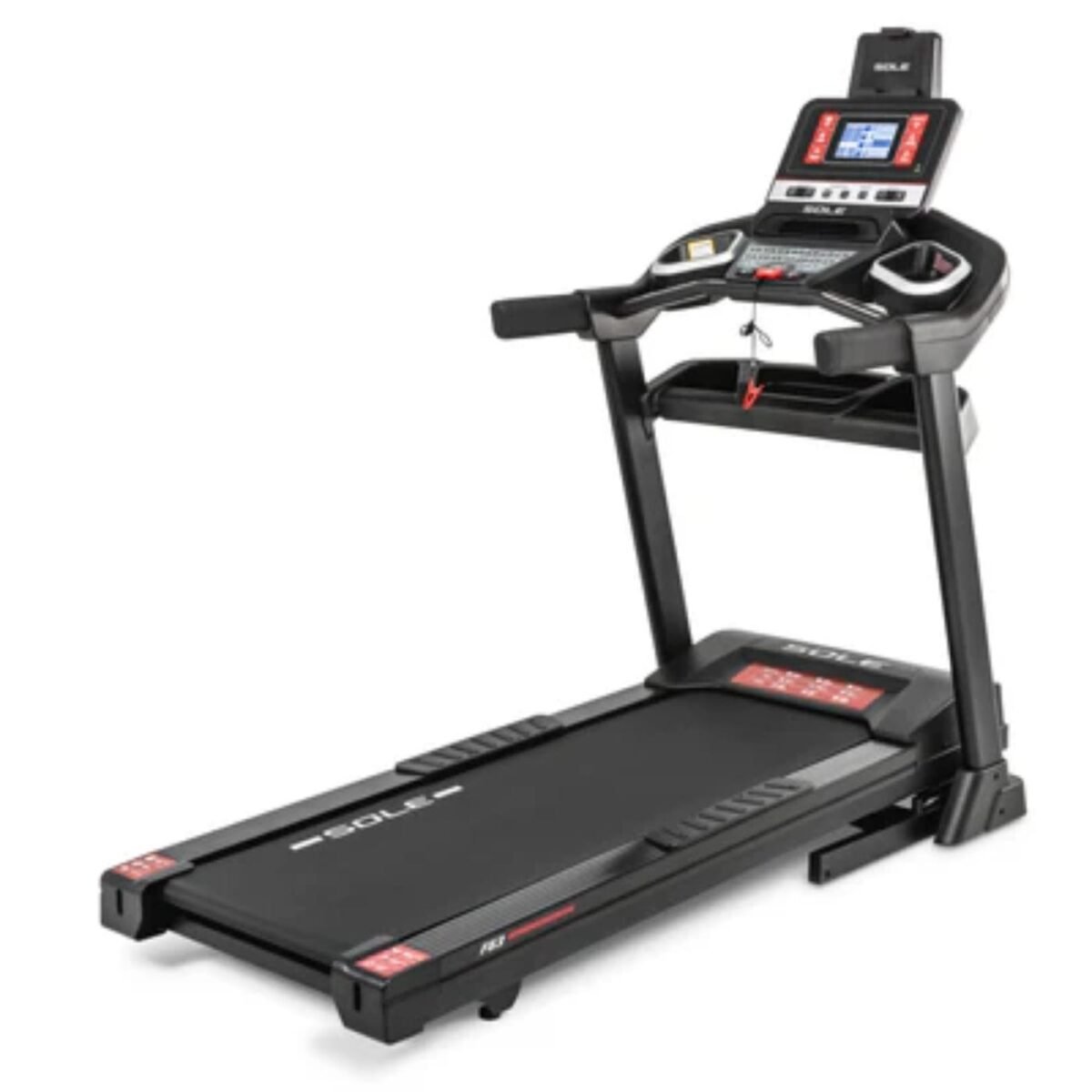
The Horizon T101 is a sensible walking and light-jogging machine; the Sole F63 and NordicTrack T Series 10 step up to regular running.
Bikes: upright, recumbent or indoor cycle?
Recumbent – seat with a backrest, legs out front. Easiest on the back, easiest to sit on for an hour. Best for rehab, older users and long low-intensity sessions. The Horizon 5.0R is a typical example.
Indoor cycling bike – weighted flywheel, road-bike position, designed for standing intervals and classes. The Schwinn 800IC and the Peloton Bike are built for this. Intense and genuinely engaging; an uncomfortable saddle if you want to read.
Be honest about which of those two describes you. It is the most common mismatch in home gyms.
The boredom problem
This decides more outcomes than any specification. Some people need a class, a leaderboard and an instructor; for them a connected bike earns its subscription many times over. Others resent being sold a membership and will happily watch their own programmes on a basic machine with a tablet holder.
Neither is wrong. But buying a connected machine you will not subscribe to – or a basic one when you need the class to show up – is how machines end up as clothes racks.
Ellipticals and climbers
Stride length is the spec to check: 18 inches suits shorter users, 20–22 inches suits most adults. Too short and it feels like shuffling. The Sole E25 and Schwinn 411 cover the mainstream.
A cardio climber combines stepping and elliptical motion in a much smaller footprint – worth considering where floor space is the binding constraint.
Before it arrives
Measure your doorways and the route to the room. Cardio machines are heavy and mostly do not come apart after assembly. A treadmill weighing 250 lb that will not turn the corner at the top of your stairs is an expensive problem.
Concrete basement floors also transmit noise upward – a rubber mat under the machine helps, and protects the floor.
Browse the range
See all 13 in Cardio Machines – treadmills, ellipticals, bikes, rowers and climbers, delivered free across the lower 48.
Tell us your ceiling height, your available floor space and any joint issues, and we will narrow it to two.