

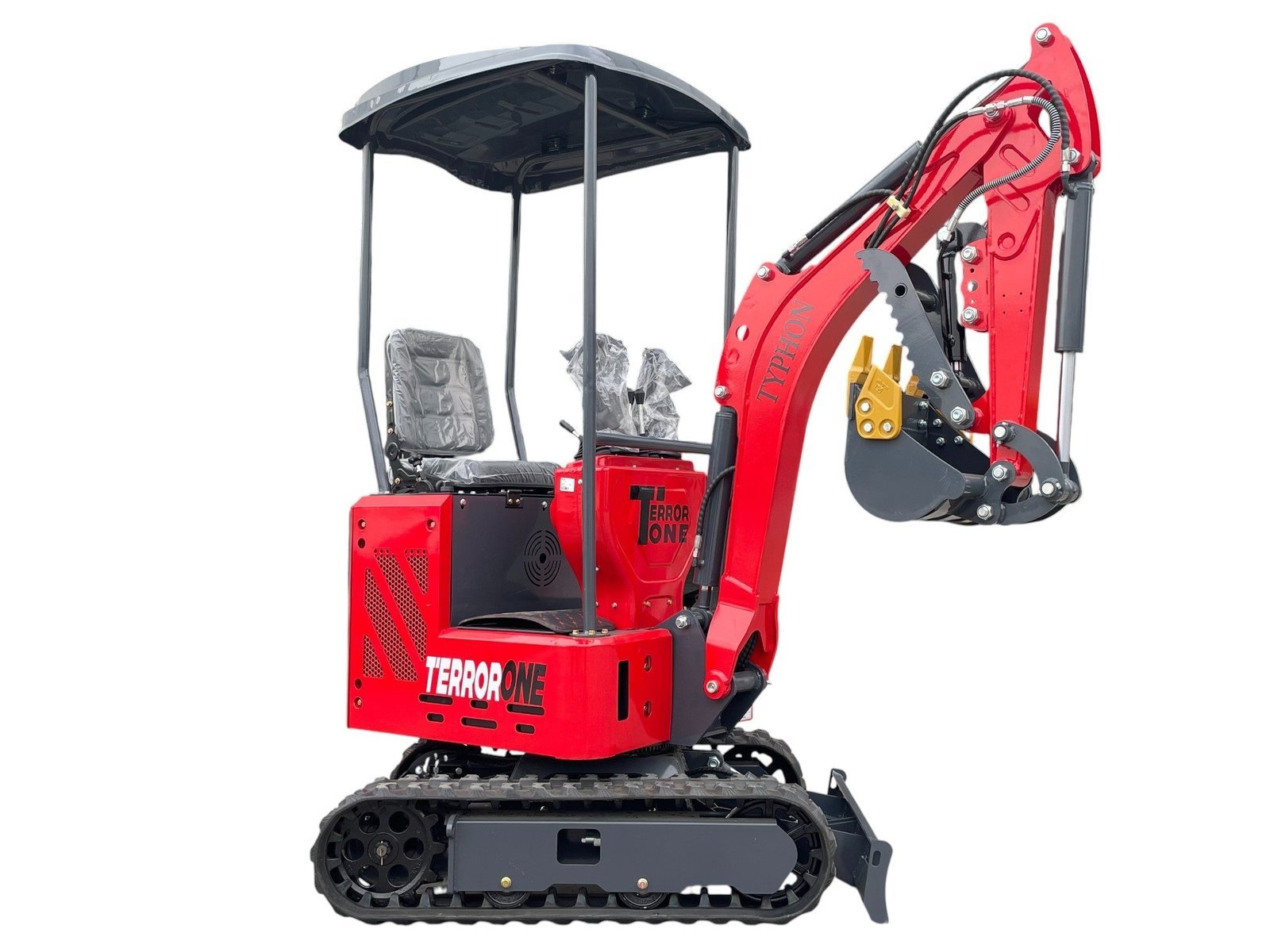
Mini excavators are sold by tonnage, and tonnage is the least useful way to shop for one. What actually matters is whether the machine fits through your access, reaches your depth, and can be moved on the trailer you already own.
Start with your narrowest gap
Measure the tightest point the machine must pass – a side gate, a fence line, a basement door. Everything else follows from that number.
- Under 36 inches – you need a 1 ton class machine, and possibly retractable tracks.
- 36 to 48 inches – 1 to 1.5 ton opens up.
- Over 60 inches – 2 ton and up become practical.
A machine that cannot reach the work is worthless regardless of its specification.
What tonnage actually buys you
Weight class correlates with dig depth and reach more than with raw power:
- 1 ton – roughly 5 to 6 ft dig depth. Drainage, footings, garden work, utility trenches.
- 1 to 1.5 ton – 6 to 8 ft. Septic work, pool prep, small foundations.
- 2 ton and up – 8 ft plus, and enough mass to break compacted ground rather than bounce off it.
If you find yourself repeatedly lifting the machine off the ground on its own boom, it is too light for the job.
Towing is the constraint people forget
Add the machine weight, the trailer weight and your attachments, then compare that with your vehicle’s tow rating. A 2 ton excavator on a 2,000 lb trailer is around 6,400 lb before attachments – beyond a half-ton pickup’s comfortable range.
This frequently decides the purchase. A 1 ton machine you can move yourself beats a 2 ton you have to pay to transport every time.
Features worth paying for
Hydraulic thumb. Turns the bucket into a grab for rocks, roots and debris. The single most useful addition on a small machine.
Boom swing. Lets the boom offset sideways so you can dig parallel to a wall without repositioning the tracks. Essential in tight yards – see the TERROR XI STORM.
Dozer blade. Backfills the trench you just dug and stabilises the machine while digging. Included on the TYRANT X.
Canopy. Overhead protection and shade. Cheap, and you will want it by hour three – the TERROR ONE STORM has one as standard.
Petrol or diesel
Smaller machines run petrol engines from Briggs & Stratton and similar – easy to service, parts available anywhere, fine for intermittent use. Larger units move to Kubota diesel, which costs more but delivers more torque and far longer service life under sustained load.
For weekend and property work, petrol is usually the sensible economy. For anything approaching daily use, diesel repays the difference.
Buying versus renting
Honest arithmetic: daily rental runs roughly $250–400 plus delivery each way. If your project is three days, rent. If you have ongoing land to manage, an owned machine is available on the weekend the ground is finally dry – and small excavators hold their value unusually well.
Attachments change what the machine is
Fitted with an earth auger, it becomes a post-hole borer for fencing and decks. With a hydraulic hammer it breaks concrete and rock. Check the auxiliary hydraulic flow rating before buying attachments – an underpowered circuit runs them slowly or not at all.
Browse the range
See all 55 machines in Machinery – mini excavators, mini skid steers, electric forklifts and attachments, shipped by freight across the lower 48.
Tell us your access width, your dig depth and what you tow with, and we will point you at the right two or three.