

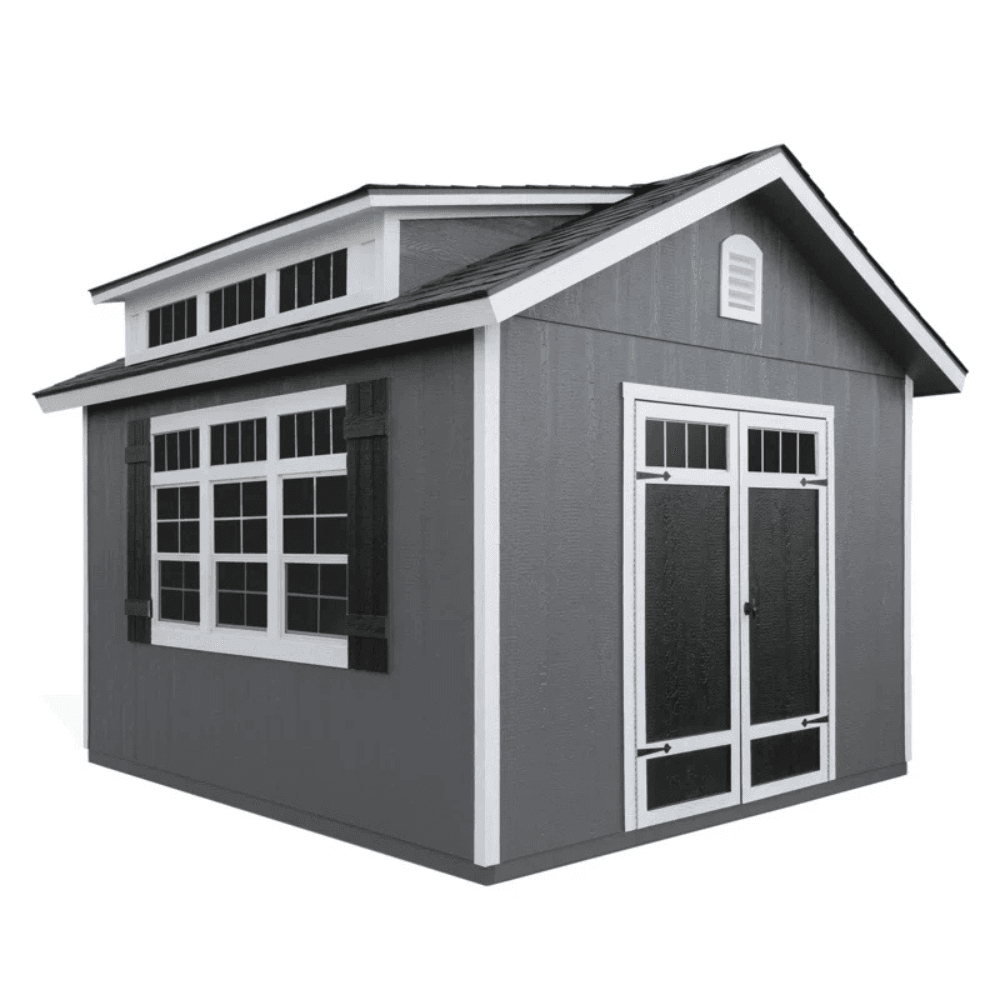
Three materials dominate the backyard shed market, and the marketing for each is written to make the other two sound like mistakes. They are not. Each suits a different owner, a different climate and a different tolerance for maintenance.
The quick version
- Wood – best looking, strongest for shelving and hanging, needs staining every few years.
- Resin – zero maintenance, will not rot or rust, hardest to modify.
- Metal – cheapest per square foot, fastest to build, weakest in hail and snow.
Wood
A wooden shed is a small building. You can screw into the walls, hang a bike from a rafter, add a window, insulate it and run power to it. If the shed might become a workshop or studio, buy wood – the others cannot become that.
It also looks like it belongs in a garden in a way plastic never quite does, which matters if it sits in view of your kitchen window.
The cost is maintenance. Expect to re-stain every two to four years depending on your climate, and to keep the base off wet ground. Models like the Handy Home Windemere 10×12 and the Rookwood 10×12 ship as kits with the floor included, which is worth having – a shed floor bought separately is rarely cheaper.
Resin
High-density polyethylene sheds have improved enormously. They do not rot, rust, fade badly or need painting, and they shrug off the salt air that destroys metal near the coast. Most have double-wall panels with a steel-reinforced core and a moulded floor that goes straight onto a level base.
The limitation is modification. Hanging heavy items means using the manufacturer’s anchor points, and cutting a new window is not realistic. If you want a box that needs nothing from you for fifteen years, this is it – something like the Lifetime 15×8 dual entry.
Metal
Galvanised steel gives you the most covered square footage per dollar and goes together in an afternoon. For storing a mower and garden tools somewhere out of sight, it does the job.
Be realistic about the weaknesses: it dents under hail, sheds condensation onto whatever is inside unless ventilated, and rusts where the coating is scratched. Snow load is the one to check – if you get real winters, look at the rating before you buy.
Sizing: buy one size up
The single most common regret is a shed that filled immediately.
- 8×6 – garden tools, a push mower, a few bikes. The Gardena 8×6 is a typical example.
- 10×12 – the most-bought size. Riding mower plus workbench plus seasonal storage.
- 12×16 and up – workshop territory, or a riding mower with room to walk around it.
- Garage kits such as the Lifetime 11×21 take a vehicle.
Measure your riding mower including the deck and the grass catcher, then add room to get past it.
The base matters more than the shed
Nearly every shed failure traces back to the foundation. Options, worst to best: bare soil (never), gravel pad (good, drains well), paving slabs (fine if truly level), concrete slab (best, and required by some manufacturers for the warranty).
The pad should be level within about half an inch across its length. A shed built on an uneven base will have doors that never close properly, and no amount of adjustment fixes it later.
Permits
Rules vary by town, but a common threshold is that sheds under 100–120 sq ft need no permit. Setback distances from property lines usually still apply, and HOAs often have their own rules about colour and placement. A ten-minute call to your building department before ordering can save an expensive relocation.
Delivery and assembly
Sheds arrive as kits on a pallet by freight, delivered kerbside. Plan for two people and a full day on a 10×12, longer for wood. Have the base finished and cured before delivery day – a pallet of shed panels sitting in the rain is a bad start.
Browse the range
See all 67 in Sheds, from compact utility sheds to full garage kits, shipped free across the lower 48.
Not sure what size fits what you own? Message us with a list and we will work it out with you.