

A car lift is the single biggest upgrade most home mechanics ever make, and the wrong choice is expensive to undo. The decision comes down to your ceiling height, your floor, and whether you want to work under the car or park a second one beneath it.
Two-post versus four-post in one paragraph
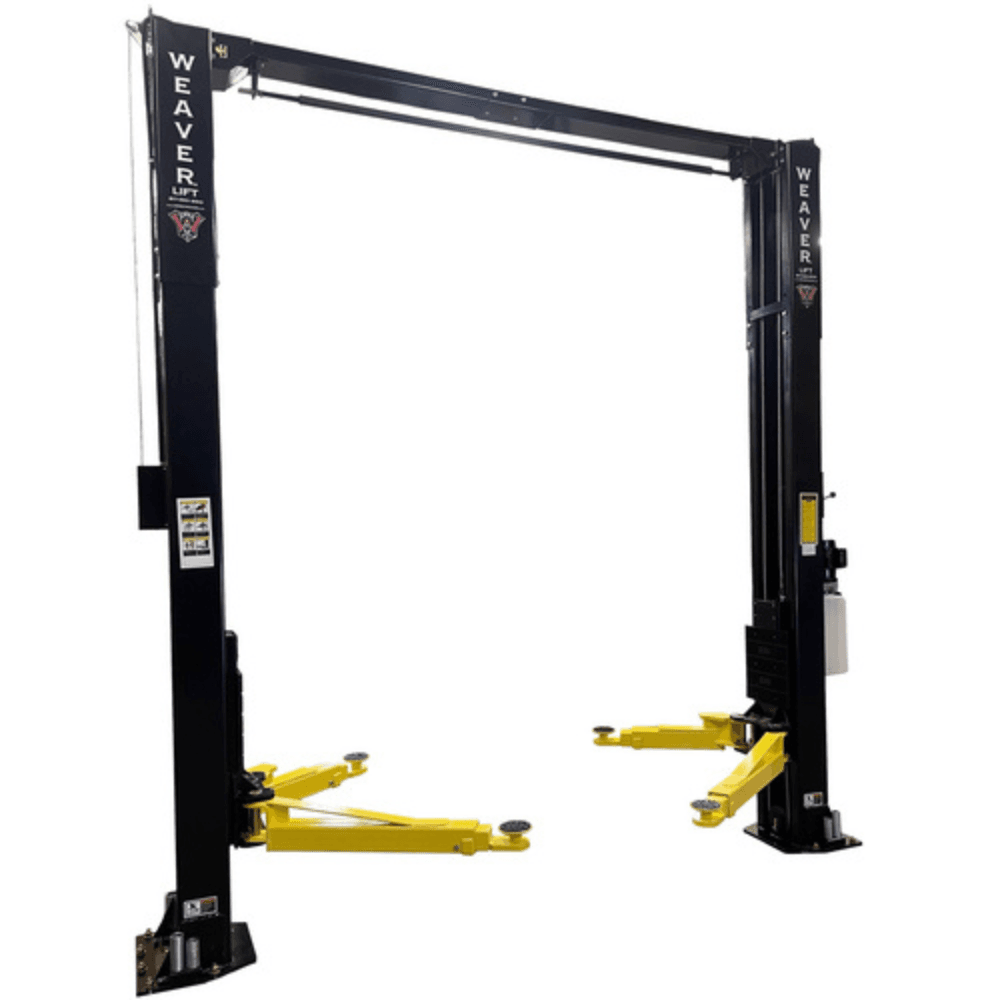
A two-post lift grips the vehicle by its frame and leaves the wheels hanging free. That is what you want for brakes, suspension, exhaust and transmission work. A four-post lift drives on like a ramp and supports the tyres. That is what you want for storage, oil changes and anything that does not require the wheels off.
Most people who say “I want a lift” want a four-post and do not know it yet. Most people who actually turn wrenches want a two-post.
Ceiling height decides more than you think
Measure before you shop. This is where most home installs fail.
- Under 10 ft – a full-rise lift will not fit. Look at mid-rise scissor lifts or portable systems.
- 10 to 11 ft – workable for most four-post lifts and low-profile two-post models. You will not stand fully upright under a tall truck.
- 12 ft and over – comfortable for a standard two-post, and enough for stacked parking on a four-post.
Remember the lift carriage adds height above the car, and a garage door track eats usable space. Measure to the lowest obstruction, not the peak.
Your concrete matters more than the lift
A two-post lift transfers the entire weight of the vehicle into four anchor points in your slab. Most manufacturers require a minimum of 4 inches of concrete at 3,000 PSI, and some ask for more. If you do not know what your slab is, core-drill and check before you buy, not after.
Four-post lifts spread load across a much larger footprint and generally do not need anchoring at all – which is why they suit rented space and imperfect floors.
Capacity: buy more than you need
Rate by the heaviest thing you will ever lift, then add margin. A mid-size SUV runs 4,500–5,500 lb, a half-ton pickup 5,000–7,000 lb. A 9,000 or 10,000 lb lift covers almost any private garage. Going up in capacity usually costs less than you expect and removes the question permanently.
Overhead or floorplate?
On a two-post, the equalisation cables run either through an overhead beam or through a channel in the floor. An overhead beam limits vehicle height – you will hit it with a tall van. A floorplate leaves the roof clear but puts a ramp across your working floor. Low-roof garages favour floorplate; most others favour overhead, like the Weaver W-10KHD.
If you cannot alter the garage
Renting, or unwilling to drill the slab? There are real options:
- QuickJack 5000TLX – a portable frame lift that stores against a wall. Not full standing height, but genuinely transformative over jack stands.
- AMGO EM06 mid-rise scissor – rolls away, lifts to working-bench height, good for wheels and brakes.
- Atlas PRO8000EXT portable four-post – castors let you reposition it.
Budget for the install
The lift price is not the project price. Plan for a 220V circuit for the power unit, freight delivery to a kerb rather than into the garage, and either equipment hire or two strong friends to stand the columns. A two-post typically needs half a day and an engine hoist or forklift to raise the posts safely.
Safety, briefly but seriously
Check the mechanical locks engage audibly at every height. Never work under a lift resting on hydraulics alone. Learn the manufacturer’s lift points for your vehicle – pinch welds and jacking pads are not interchangeable across makes.
Browse the range
We stock 82 lifts, jacks and ramps in Car Lifts, from portable jacks to full 4-post storage systems, shipped by freight across the lower 48.
Tell us your ceiling height and what you drive, and we will tell you honestly which of these fits – including when the answer is none of them.